
What to Do When Your Doctor Tells You to Get Your Affairs in Order

Five words no one ever wants to hear from their doctor are “Get your affairs in order.” Unfortunately, 76 percent of Americans do not have a will, and it often requires a chronic disease, terminal illness diagnosis, or other life-changing event to prompt people to start the estate planning process.1 If you are facing a serious medical diagnosis, follow these tips on crucial documents that will enable you to take back control of your future, ensure that your wishes are honored, and prevent difficult decisions about finances, healthcare, and guardianship from falling to your loved ones during a crisis.

Physician or Medical Orders for Life-Sustaining Treatment

Physician orders for life-sustaining treatment (POLST) and medical orders for life-sustaining treatment (MOLST) are immediate treatment directives that translate your wishes from a living will (see below) into actionable medical orders. They are intended for people with serious medical conditions and may contain do not resuscitate (DNR) or do not intubate (DNI) orders, among others.

Unlike a living will or other documents that you may prepare with your estate planning attorney that are addressed to your family and doctors, a POLST or MOLST is a portable document created in conjunction with and signed by you and your healthcare provider. It is specifically designed to be followed by all medical personnel and can be essential for ensuring that your wishes regarding life-sustaining treatment are respected in an emergency setting. Although POLST and MOLST are common names, the specific name and document form depend on your state and will likely be made available to you by specific medical providers or institutions rather than being provided to you as part of your estate plan.

Living Will

A living will is a directive that sets forth your wishes for the medical treatments you do and do not want if you become unable to communicate your decisions and are in a terminal or end-stage condition with no probable chance of recovery. Outlining your preferences in detail can help ease the burden on loved ones who may otherwise have to guess what you would have wanted. In some jurisdictions, a living will may be combined with a healthcare power of attorney (see below) in a single document called an advance healthcare directive.

Healthcare Power of Attorney

A healthcare power of attorney allows you to designate a trusted person (a healthcare agent or attorney-in-fact) to make healthcare decisions on your behalf if you cannot communicate or make decisions yourself. Choose someone who can stay calm under pressure and advocate for your wishes, and talk with them in advance and in detail about your priorities, values, and preferences for treatment and life-sustaining measures so that they are prepared to act confidently on your behalf.

Financial Power of Attorney

A financial power of attorney authorizes a trusted individual (the financial agent or attorney-in-fact) to carry out certain financial matters on your behalf. Note that your bank or investment institution may resist honoring the authority granted under a financial power of attorney and may instead prefer their own separate forms.

Last Will and Testament

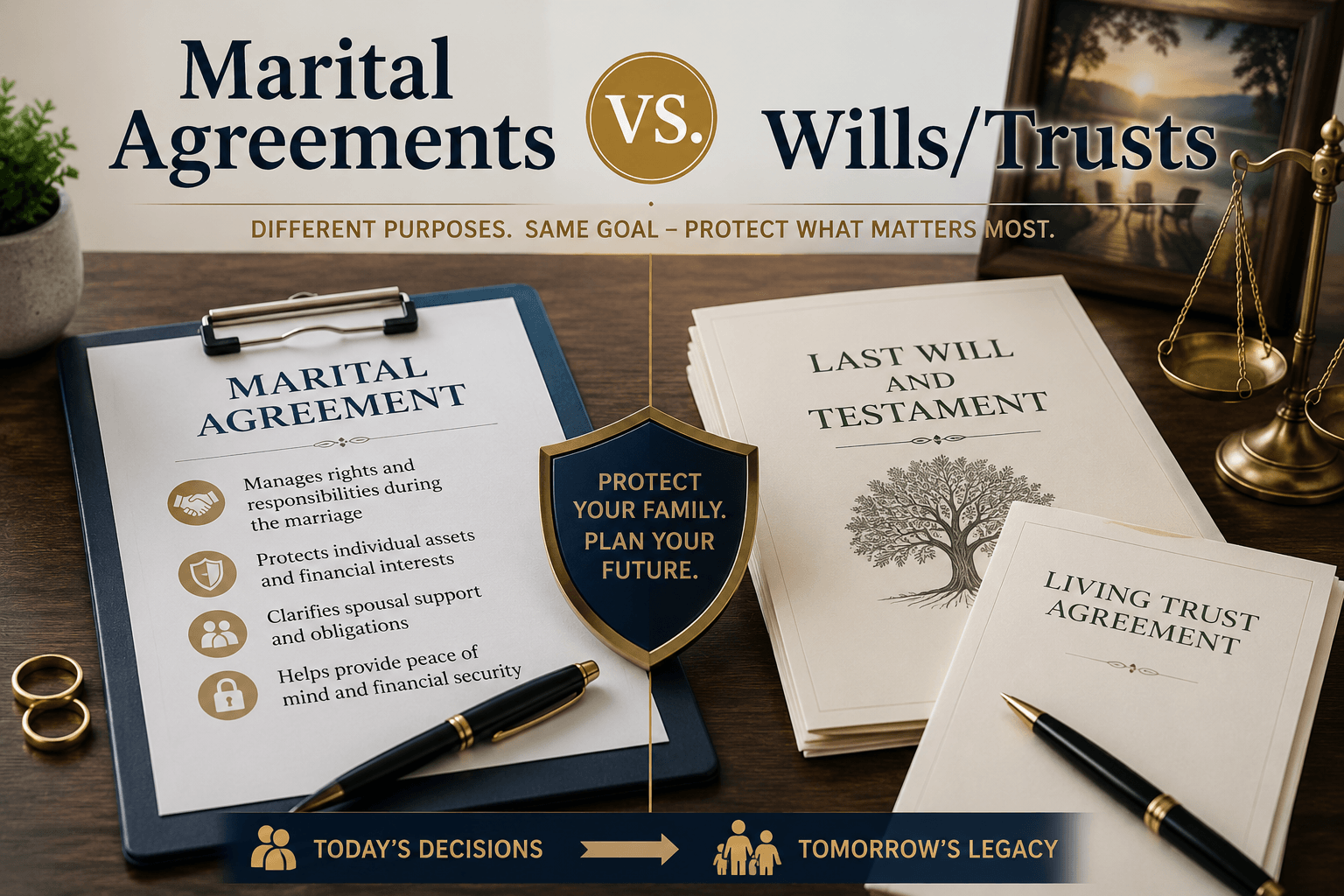
In the simplest terms, a last will and testament is a statement directing how you want your money and property to be handled when you die. You must designate an executor or personal representative to carry out the instructions in your will; this person will distribute your assets to the recipients you identify in your will. You must also account for digital assets such as email accounts, cloud storage, social media profiles, or online trading accounts and cryptocurrency. Some states also allow you to include a personal property memorandum that lists your personal possessions and designates the recipients. One benefit of this memorandum is that you can update the document without needing an attorney to change your will.

Note that assets that have named beneficiaries, such as retirement accounts and life insurance, generally pass outside your will.

In your will, you can also nominate a guardian for your minor children. If you do not have plans in place that contain a guardianship nomination for your minor children, a judge will have to determine guardianship without your guidance and without knowing your preference. According to Caring.com, only 35 percent of parents with minor children have a will.2

Trust

A trust is a legal arrangement that lets you transfer assets to beneficiaries in a controlled way, often allowing those assets to avoid probate (the court-supervised process of validating a will and distributing property). The most common categories are revocable living trusts, which can typically be changed during your lifetime, and irrevocable trusts, which generally involve more permanent terms and may be used for specific planning goals.

A trust can also serve as an incapacity planning tool. If you become unable to manage your affairs, a properly funded trust allows ongoing management of trust assets without the delays and expense that can come with court involvement. You can set clear instructions about who receives assets, when they receive them, and under what conditions, while a third party—the trustee—carries out those instructions and manages the trust property for the benefit of your named beneficiaries.

In addition to ensuring that you have had the necessary estate planning documents prepared, you can take several other steps to secure your family’s future if you are facing a serious illness:

  • Consider drafting a separate letter detailing any specific wishes for raising your minor children. While it is not typically a legally binding document, it gives you space to share your values, the kind of upbringing you hope that your children receive, and practical guidance for a future guardian.
  • Gather important documents. Ensure that your attorney and one or two trusted people know where to find important documents, including identification records, recent tax returns, insurance policies, account and loan information, retirement and pension plan details, deeds and titles, investment statements, and your estate planning documents such as your will and trust.
  • Do not overlook planning for digital assets. Email accounts, social media profiles, websites, and apps such as Amazon, PayPal, and Venmo all have different postdeath policies, so planning ahead helps ensure that access, continuity, or closure happens according to your wishes.
  • Consider making funeral or memorial plans ahead of time. You should consider how costs will be covered because expenses can be significant, and the decisions are often time-sensitive.
  • Review the beneficiaries listed on your retirement accounts and insurance policies. These assets typically transfer according to terms in the contract (called a beneficiary designation) and are not governed by your will or trust, so keeping beneficiary designations up to date is essential to ensure that the outcome matches your intent.

Facing a chronic or terminal illness diagnosis is overwhelming. We are here to help you reclaim control by assisting you in carefully crafting or revising your estate plan. These efforts will not only ensure that your intentions are carried out but also help lighten the load on your loved ones.


  1. Victoria Lurie, 2025 Wills and Estate Planning Study, Caring (Sept. 17, 2025), https://www.caring.com/resources/wills-survey. ↩︎
  2. Rachel Lustbader, 2024 Wills and Estate Planning Study, Caring (updated Jan. 9, 2026), https://www.caring.com/resources/2024-wills-survey. ↩︎

Beyond Assets: The Power of Ethical Wills

What do you hope to leave behind for your loved ones? Beyond the financial aspect, how do you hope your legacy will be felt and remembered?

These questions lie at the heart of every estate plan and typically inform discussions about the things that someone plans to leave behind: homes, savings, heirlooms, and other types of assets. However, the most meaningful legacies are often those we leave our loved ones in the form of moral guidance, personal values, and life lessons.

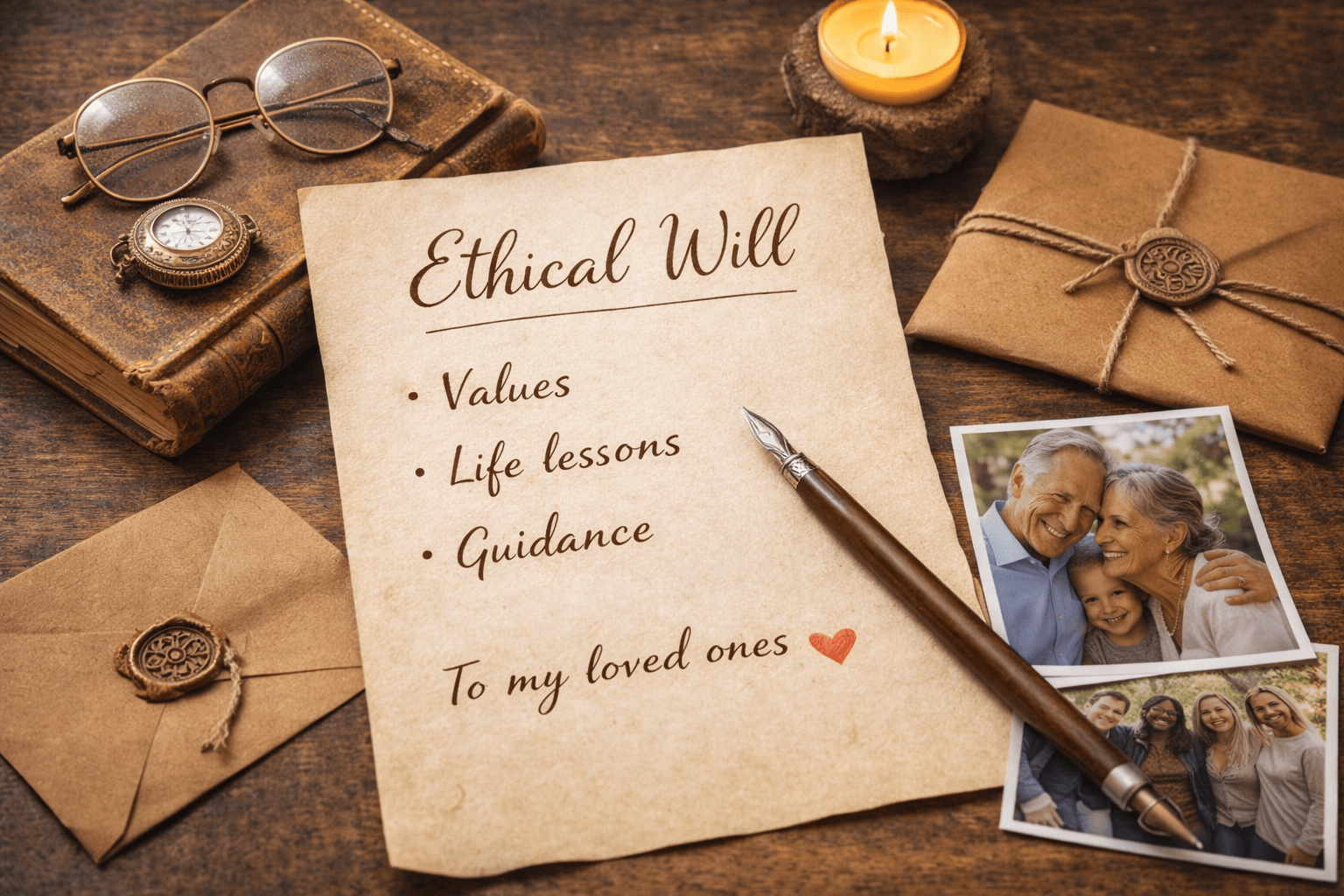
Ethical wills (often also called legacy letters, guidance letters, or values statements) have roots in ancient biblical culture, where they began as spoken messages passed from one generation to the next. Now embraced by people of all faiths and backgrounds, the ethical will has evolved into a nonlegal document used to pass something more intangible on to loved ones. Unlike a last will and testament, which directs how your money and property are to be distributed after your death, an ethical will shares your values, beliefs, and hopes. It adds the why to an estate plan, which traditionally focuses only on the what and how.

Ethical wills are as relevant as they have ever been and can help you leave meaning—not just money—as part of your legacy.

A History of Ethical Wills: From Biblical Patriarchs to Modern Families

In the Book of Genesis, the patriarch Jacob, nearing death, calls his 12 sons to his bedside and talks to them about his hopes for each one’s future.1 He gives blessings and specific moral instructions for each son’s future conduct. His words provide an early example of an ethical will because they blend guidance, values, and hopes meant to shape the next generation.

That ancient practice of fusing blessing, instruction, guidance, and hope did not end in biblical times. It sparked a written tradition of ethical wills that Jewish families carried throughout medieval Europe and into modern life. Even now, millennia later, many families create an ethical will alongside their legal estate planning documents to give their loved ones the most valuable inheritance of all: their personal story, wisdom, and values.

What Ethical Wills Are—and Are Not

In a modern sense, an ethical will allows you to leave behind your own set of guiding principles—your personal “shalls” and “shall nots”—which can be just as foundational to your estate plan as your last will and testament.

What an ethical will is:

  • A record of your values, beliefs, and intentions—not your property
  • A guide for loved ones, offering context for decisions you have made in life and in your estate plan
  • A thoughtful tool for reflection, helping you articulate what really matters to you and what you hope to pass on beyond material belongings

What an ethical will is not:

  • A legally binding document; it cannot distribute property or enforce financial decisions, which remains the role of a last will and testament or a trust
  • A replacement for formal estate planning; ethical wills complement, rather than replace, traditional legal tools
  • Something to create only at the end of your life; while many people do in fact write them later in life, an ethical will can be created at any age, updated over time, and shared whenever it feels meaningful

A traditional last will and testament explains who inherits from your estate, what they will receive, and whenand howthey will receive it. An ethical will answers the why, capturing the moral and personal meaning behind the legacy you are leaving.

Your legal documents may specify which family members are to receive your house or savings and include provisions such as spendthrift clauses, special needs trusts, or continuing trusts for beneficiaries with distributions tied to certain ages or milestones. Your ethical will can share the reasoning behind those choices. It can build on conversations and lessons you shared with loved ones during your lifetime, serving as a last reflection of your values, experiences, and hopes for the future. Think of it as your own lasting message meant to guide and encourage the people you love.

What to Include in an Ethical Will

You are under no legal obligation to create either a last will and testament or an ethical will. In fact, roughly two-thirds of Americans do not have a last will and testament.2 When asked why, most people say they just “haven’t gotten around to it” or “don’t have enough assets to leave to anyone.”

You may have the same reasons for not creating an ethical will. Or you may be unsure of what to say or how to start. You may believe that you have already said what you needed to say during life through your words and actions and feel content trusting that your legacy will be understood.

When deciding whether to create an ethical will, consider engaging in the following simple exercise: Ask yourself, if you had one last chance to tell the people you love what truly matters to you and to share the wisdom you have gained from decades of choices and experiences, would you want to? What would you say? Most people are surprised by how much clarity and comfort the process of writing an ethical will brings—not just to their families but also to themselves. What seems optional at first often becomes a meaningful opportunity to articulate beliefs and intentions that might otherwise go unspoken.

When and How to Create an Ethical Will

Whether we are living blessedly in a land of milk and honey or managing a more modest estate, the legacies we leave can be shaped and strengthened by the lessons, beliefs, and values we impart regardless of our land, personal belongings, and material possessions.

There is no “right time” to create an ethical will. There is, however, limited time to create one if you want it to be well thought out, documented, and presented in a shareable, preservable format. Deathbed confessionals provide a dramatic flair, but you may prefer to take your time and ensure that the words come out right.

Distilling down a lifetime of experience is no small task. Many people find it meaningful to write or record their ethical will at turning points in their lifetime such as the birth of a child or grandchild, retirement, recovery from illness, or simply during a quiet season of reflection. Like a last will and testament, an ethical will can expand and change as you do. Your perspective at age 40 may differ from your perspective at 70, and that evolution itself becomes part of your legacy.

Ethical wills have evolved over time from oral proclamations to written letters. Today, they can take almost any form that feels authentic to you:

  • A handwritten letter or journal
  • An audio recording or voice memo
  • A video message or short documentary
  • A digital time capsule through a service such as Storyworth3 or My Life in a Book4
  • A personal scrapbook
  • An artistic legacy, such as a poem, song, or curated playlist
  • A shared online document that grows with family contributions

There is also no single correct way to share an ethical will. Some people choose to keep it private until their death, entrusting a copy to their attorney or executor. Others share it during life as part of a family gathering, holiday letter, or milestone celebration so loved ones can discuss and reflect on it together.

If you store it digitally, back it up in multiple locations or cloud services. If you write it by hand, make copies and keep one with your estate planning documents. You can also use a service like Future Me,5 which will deliver your digital letter at a predetermined future time.

However you choose to deliver it, your ethical will can become a lasting part of your legacy and may be what your loved ones remember most when everything else fades into the background.

Family heirlooms do not have to be limited to physical possessions. They can just as powerfully take the form of insights gained from lived experience, preserved and passed down from generation to generation to lead your people . . . to the Promised Land.


  1. Gen. 48:1–49:28 (New International Version), https://www.biblegateway.com/passage/?search=Genesis%2048-49&version=NIV. ↩︎
  2. Victoria Lurie, 2025 Wills and Estate Planning Study, Caring (Sept. 17, 2025), https://www.caring.com/resources/wills-survey. ↩︎
  3. StoryWorth, https://welcome.storyworth.com/home. ↩︎
  4. My Life in a Book, https://mylifeinabook.com. ↩︎
  5. Future Me, https://www.futureme.org. ↩︎

Do I Need a Will or a Trust?

Yes, everyone needs a will, a trust, or both. These important tools ensure that your legacy will be carried out according to your wishes and allow you to provide for loved ones after your passing. A properly prepared trust can also help avoid probate, which is a lengthy, public, and often expensive court process that becomes necessary when there is no legally valid estate plan in place for distributing your accounts and property after your death. Wills and trusts are not just for the wealthy: People with any level of means can benefit from having a clear plan in place to protect their loved ones, avoid unnecessary legal hurdles, and ensure that their wishes are honored. Even if your savings are modest or your property has mostly sentimental value, these planning tools provide peace of mind and control over what happens after you are gone.

Creating a will or a trust should be a priority for several important reasons, including the following:

Handling Digital Accounts

Almost everyone has at least one account or digital presence online. Think about all your photos stored in the cloud, as well as your emails, social media profiles, online shopping accounts, online payment platforms (e.g., Venmo or PayPal), and online banking accounts. Whom do you want to have access to them? Do you want the accounts deleted or transferred to someone else? What happens if the account holds money? How do your loved ones access that money? An estate plan ensures that your online photos, records, and accounts do not get lost or locked. 

Avoiding State Recovery for Medicaid Benefits

Nursing homes can cost thousands of dollars per month. Medicaid is a cost-sharing government program that supplements the costs of a person’s long-term care so long as they meet certain asset and income requirements. However, the state Medicaid agency might try—and is legally allowed—to recoup the money spent on your care from certain accounts and property you own at the time of your death. A comprehensive estate plan may be able to prevent or limit the state from recovering these costs from your bank accounts or, under certain circumstances and only in some states, forcing your loved ones to sell your family home to pay back your nursing home care costs. 

Reducing Income Tax Concerns with Retirement Accounts

An inherited retirement account is not always tax-free (depending on the type of account). While an estate or inheritance tax may not apply, the beneficiary may have to pay income tax based on the amount they received and their current income tax bracket. Including your retirement accounts in a proactive estate plan can help protect your nest egg and possibly limit your beneficiaries’ income tax burden when they inherit these accounts.

Maintaining Control of Your Legacy and Protecting Beneficiaries

Estate planning can help ensure that your money and property are distributed in accordance with your wishes after your death. For example, if you want to provide not only for your surviving spouse but also for your children from a prior relationship, your estate plan can help you do that. It can also protect your beneficiaries’ inheritances from claims by divorcing spouses or creditors, pending lawsuits, or exposure to financial predators. With a plan, your money and property are also less likely to be lost to your beneficiaries’ mismanagement or frivolous spending—a surprisingly common outcome when no safeguards are in place. In fact, studies show that 70 percent of family wealth is depleted within the two following generations and 90 percent within three generations.1 With thoughtful planning, you can avoid becoming part of that statistic.

An estate plan can also help ensure that your values are passed on to the next generation and that your wishes are legally documented in a way that everyone understands. Discussing your wishes with your loved ones will not make your plan for the future legally enforceable. The only way to ensure that your goals are carried out is to work with an experienced estate planning attorney to create a will or a trust. Do not put off this important step. Taking the time to plan will save your loved ones stress, money, and heartache in the future. It is truly a gift to them.

  1. How real is the third-generation curse, and how can financial advisors tackle it? CFA Institute (Feb. 6, 2025), https://www.cfainstitute.org/insights/articles/third-generation-wealth-curse-advisor-solutions. ↩︎

If I Give My Home to My Child in My Will, Can They Take My Home While I Am Still Alive?

The short answer to this question is no. Naming your child as the recipient of your home in your will does not give them any right to your home while you are still living. However, understanding why that is the correct answer requires a little more explanation.

Title Is Key

When it comes to real property such as a house, the person who has title to (or legal ownership of) the property controls the property. The title holder (owner) can lease, mortgage, refinance, sell, gift, or do anything else with the property. When you purchased your home, you received title to it through a deed. This deed proves you are the owner and you have all rights to your property.

A Will Is Effective Only upon Your Death

A will is a legal document that specifies what happens to your property upon your death. The key phrase here is “upon your death.” A will has no real legal significance until the time of your death. A will does not change title (ownership) to property during your life, so naming your child in your will as the recipient of your home means that they have no ownership rights to your home until after your death. Also, you can rewrite or change a will at any time during your life while you are still mentally able to do so. For these reasons, your child cannot take your home while you are still alive.

A Word of Caution

Using a will to give your house to your child at your death guarantees that they will have to go through the probate process to complete the title transfer. In an effort to avoid probate, some people will put their child’s name on the deed to their home while they are living, with the intent of continuing to own the home while they are alive and passing the home to their child at the time of their death. As discussed above, title to property is received through a deed. If you put your child’s name on the deed to your home, they immediately become a co-owner. As a co-owner, they can do what any owner of property has the right to do: lease, mortgage, refinance, etc. So while naming your child in your will as the recipient of your home at your death does not give them the ability to take your home while you are still alive, putting your child’s name on the deed to your home would indeed give them–and their creditors–that ability.

If you want to ensure that you maintain control of your home while you are alive, that your child receives your home upon your death, and that they can avoid the probate process, there are estate planning tools such as a transfer-on-death deed or a revocable living trust that can accomplish all of these goals. We are happy to meet with you to discuss your unique goals and how a tailored estate plan can help you meet them.