
Goodness Gracious! What Jerry Lee Lewis’s Estate Plan Could Look Like

Jerry Lee Lewis passed away in October 2022, leaving behind a long legacy, a large family, and a multimillion-dollar estate.

Celebrities can give us a glimpse into lifestyles beyond our wildest dreams. But celebrities face many of the same estate planning issues that the rest of us do, such as which tax planning strategies to use and how to divvy up assets among loved ones when they die. 

Jerry Lee Lewis’s death has prompted thoughtful retrospectives about his life in the spotlight. But on a more practical level, his death raises questions about what will become of his estate. This exercise in estate planning “what ifs” can provide lessons for anyone—celebrity or not. 

What Lewis Leaves Behind

Lewis died in his home near Memphis on October 28, 2022, at the age of eighty-seven. He outlived other rock and roll icons of his era such as Elvis Presley and Johnny Cash despite a hard-charging lifestyle that included substance abuse and serious health problems. Vulture, part of New York Magazine, describes him as “the last man standing from the dawn of rock and roll.”1  

Arguably best known for his rock song “Great Balls of Fire,” Lewis also had country hits and was a four-time Grammy winner. He is a member of both the Rock & Roll Hall of Fame and the Country Music Hall of Fame who recorded over forty albums during a career that spanned seven decades. 

Lewis is survived by Judith Coghlan Lewis, his seventh wife. He also had six children. Four of his children are alive—Jerry Lee Lewis III, Ronnie Lewis, Phoebe Lewis, and Lori Lancaster. In the years before his death, Lewis was embroiled in a feud with his daughter Phoebe and her husband, Ezekiel Loftin. In 2017, Lewis sued Phoebe and Loftin for allegedly taking financial advantage of him, although the suit was later dismissed.2 

Lewis filed for bankruptcy in 1988. His petition listed over $3 million in debts, including $2 million in Internal Revenue Service debt, tens of thousands in attorney fees, and medical bills.3 At the time of his death, his net worth was estimated to be between $10 million and $15.4 million.4 

Estate Planning Scenarios

As estate planning lawyers, we cannot help but look at Jerry Lee Lewis’s life and legacy through the lens of our vocation. Most of us do not relate to his fast-living rock and roll lifestyle, but we can see common estate planning issues his life raises that may be helpful for you to think about. Below, we discuss some of the issues we are keeping an eye on regarding Lewis’s estate.

How will he treat his children?

It is probably a safe bet that Phoebe—the daughter he accused of elder abuse—will be disinherited by Lewis, which he is allowed to do under Mississippi law. However, there is a chance she will not need his money, as Phoebe had her own career in music and worked in Hollywood. 

It remains to be seen how Lewis treats his other surviving children in his estate plan. While many parents choose to leave their children equal amounts of money and property, the Lewis family’s situation raises the question of what is fair versus what is equal. 

Every child has different financial needs. Some achieve financial independence, and others struggle financially. Parents might also treat their children differently based on the age at which they had them and their finances at the time. For example, children born later, after their parents have established good careers, might receive more than children born earlier, when their parents were not making as much. Splitting everything equally among children might not always be the fairest approach. 

How will he treat his surviving spouse?

Lewis was married seven times, and his marriages were not without controversy. His latest wife was by his side when he died. Will he reward her loyalty?

If Lewis did not have a will, then intestate law (the law specifying what happens when you have no will) dictates that his spouse is the primary beneficiary of his estate. Around two-thirds of Americans die with no estate plan. Celebrities are not immune to this lack of planning; there have been many celebrities who have died without even a basic will. 

Assuming Lewis had a will, he still could have left everything to his wife. Or, he could have left her a portion of his wealth. If the latter is true, the share could be given outright (i.e., as a lump sum) or held in a trust and managed by a trustee, to be distributed to her over time. 

Lewis had further options for the type of trust he used. Each type of trust has pros and cons. For example: 

  • A qualified terminable interest property (QTIP) trust would allow him to provide trust income to his wife but maintain control of what happens to the trust’s money and property once she dies. Additionally, he could give the trustee discretion to give his wife additional amounts during her life. QTIP trusts are often used when somebody has beneficiaries from a past marriage but wants to provide for their current spouse if they die before the spouse. 
  • A discretionary trust set up for Lewis’s wife would give the trustee discretion to make payments to her as the trustee sees fit. While this type of trust could help protect the trust’s money and property from creditors, money given to a discretionary trust will not qualify for the unlimited marital deduction. 

Tax Issues

Death and taxes are inevitable. However, estate taxes may not be inevitable, depending on the size of the estate at the time of death and how much of the lifetime exemption has been used. 

The lifetime gift and estate tax exemption is the amount of money an individual can transfer to their heirs without being liable for estate taxes. These transfers can be made as gifts over the course of a person’s life or at death. 

For 2022, the federal lifetime gift and estate tax exemption was $12.06 million. In 2023, it increased to $12.92 million. Taking the lower-end estimate of Lewis’s net worth, his estate value falls below the 2022 lifetime exemption amount. As a result, assuming he did not use any of his exemption during life, he may not have required strategies to avoid estate taxes if his spouse does not have significant personal assets. For couples, the exemption amount doubles to $24.12 million (2022) and $25.84 million (2023). 

Lewis’s estate does not have to worry about an estate tax being levied by the state of Mississippi because Mississippi does not have an estate tax. However, if he had died in a state with a state estate tax, or if he had died owning property in one of those states, there could be an additional tax due because of his death. Each state with an estate tax sets its own exemption amount and tax rate. 

If Lewis’s wife has money and property that exceed the individual gift and estate tax exemption, she may benefit from electing to receive the deceased spousal unused exclusion (DSUE) amount. Meant to benefit the surviving spouse, the DSUE enables the deceased spouse’s remaining exemption amount to be transferred to the survivor if the deceased spouse’s estate did not use the entire exemption amount. In other words, Lewis’s wife would qualify for a $2.06 million DSUE amount based on the 2022 exemption of $12.06 million and his estimated estate value of $10 million. 

Unexpected Plot Twists 

There is no telling exactly what Jerry Lee Lewis decided to do with his money. His wife and children may be just as in the dark as the rest of us. And there could be some surprises lurking in his estate plan. 

The Lewis family asked that in lieu of donating flowers for his funeral services, donations be made in his honor to the Arthritis Foundation or MusiCares. Could Lewis have left a sizable portion of his estate to these or other charities instead of to his family? 

We may find out in the months ahead—or we may not. If he left the money to charity in a trust, information about his estate might not become public. 

Estate Plans Are Not Just for Rock Stars

You do not need to be a rock-and-roll legend to need an estate plan. Regardless of the size of your estate, you should prepare a blueprint for how your assets will be distributed, how your debts will be settled, and how you can ensure that more of your wealth ends up with the people and causes you care about. To start planning today, contact our office to schedule a meeting with our estate planning lawyers.


Footnotes

  1. Bill Wyman, Jerry Lee Lewis Was an SOB Right to the End of His Life: The Talented Hell-Raiser of Early Rock and Roll Died at 87, Vulture (Oct. 28, 2022), https://www.vulture.com/2022/10/jerry-lee-lewis-obituary-1935-2022.html.
  2. Judge Dismisses Most of Suit Between Jerry Lee Lewis, Family, U.S. News and World Report (May 13, 2019), https://www.usnews.com/news/entertainment/articles/2019-05-03/judge-dismisses-most-of-suit-between-jerry-lee-lewis-family.
  3. Jerry Lee Lewis Files Bankruptcy Petition, AP News (Nov. 9, 1988), https://apnews.com/article/14622642563978a1739790fcb13843cf.
  4. Selena Fragassi, What Was Jerry Lee Lewis’ Net Worth Upon His Death at 87?, Yahoo! (Nov. 6, 2022), https://www.yahoo.com/video/jerry-lee-lewis-net-worth-191917385.html.

Estate Planning Issues for the Modern Family

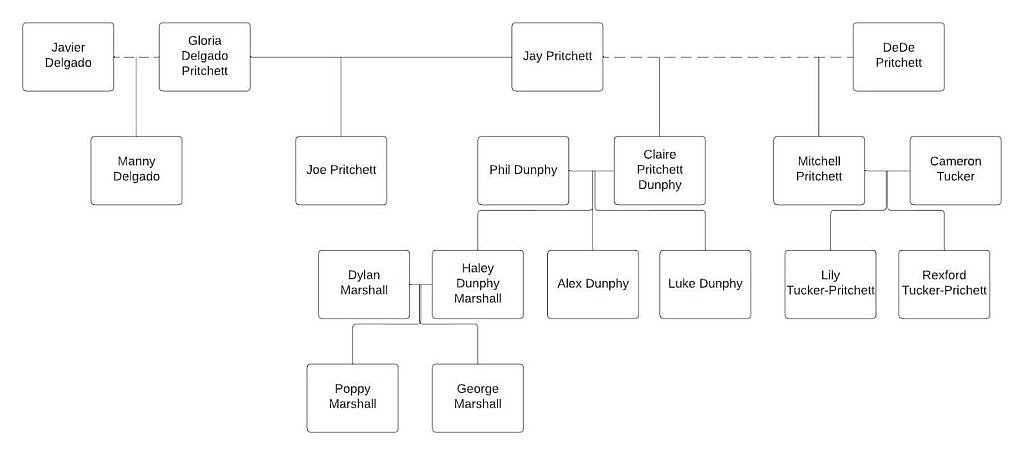
As the name suggests, ABC’s TV show Modern Family depicts the relationships and experiences between a fictional extended family. Throughout the course of the series, the show addresses many issues that families deal with each day. For a close-knit family such as this fictional one, estate planning is crucial to ensure that everyone is protected when one of them dies or becomes disabled or incapacitated. We hope that examining some of the issues this family would need to address as they prepare for such circumstances will encourage you to consider how these issues impact your own family. 

The Family’s Entrepreneurial Endeavors

Over the course of the series, there are a variety of businesses owned by members of the family. Whether it is a hobby, investment, or their nine-to-five job, these businesses require special consideration when planning for their future.

  • How are these businesses owned? Depending on the ownership structure (sole proprietorship, partnership, corporation, limited liability company), what happens to the business at the owner’s death may already be dictated by the business’s official documents. If not, there needs to be legally enforceable documentation in place to facilitate the transition.
  • Who should ultimately end up with the business? For business owners, it is very easy to get caught up in the day-to-day operations. However, it is important that you look to the future and proactively determine who should be in charge of your business. Just like Jay, if you want your child to continue your business, it is important that you have that discussion with them and pave the way for them to take over.
  • Should the business interest go directly to the next generation or be held for them? Depending on the age of the beneficiary, you may need to appoint someone to run the business until your child is sufficiently mature. Instead of relying on the state’s determination of when a child becomes an adult, you can provide specific instructions for when and how your child becomes involved in the business.

Multiple Generations of Blended Families

When determining who will receive their money and property, members of blended families must evaluate the bonds within their family. For instance, on several occasions, Jay refers to Manny as his son, and Manny spent many of his formative years living with his mother and Jay. On the other hand, although Dylan and Haley have two children together, Dylan also has children from his first marriage. Haley may not be that close to Dylan’s other children and may not want them to receive anything she owns individually (or what she may inherit from her parents). Because a stepchild has no legal right to their stepparent’s money and property, a legally enforceable last will and testament or trust needs to be put in place in order for a stepparent to leave anything to their stepchild at death.

Guides for the Next Generation

Within this extended family, there are a few minors who need guardians in the event both parents pass away. First, although Manny states that he wants to be Joe’s guardian in the event Gloria and Jay pass away, they need to name the person they want to be Joe’s guardian in their wills. However, the naming of an individual in a last will and testament or separate document is merely a nomination. This may not stop others from contesting the nomination. It may be wise for Jay and Gloria to have frank conversations with both of their families to avoid the possibility of a fight for guardianship and to prevent Joe from potentially being taken to a foreign country.

Lily and Rex are also minors who would need a guardian if their parents were to pass away. Without an appropriate estate plan, a fight between Cameron’s and Mitchell’s families is likely to occur. Although Lily spent much of her life around Mitchell’s family, by the end of the show, Lily and Rex are moving with their parents to Missouri and will be living closer to Cameron’s family. Rex will arguably grow up with a greater bond with Cameron’s family, which could lead to conflict between the Pritchett and Tucker families if a guardian for these two children is needed. 

Lastly, Poppy and George would need guardians if their parents died. Haley and Dylan may not have a lot of money and property to plan for, but their precious children deserve at least basic planning, including naming a guardian and alternates. At the end of the show, although Haley and Dylan are no longer living with Phil and Claire, they are still living close by. However, Dylan’s mother Farah started appearing once Haley became pregnant. She may have a desire to raise the children should something happen to Haley and Dylan. 

If you have minor children, it is important that you think about who you want to raise them if you cannot. Although no one will ever care for them as you would, it is important that you nominate someone in a last will and testament or separate writing (if your state allows for one). Although the court will still have to make the ultimate decision as to who will be the guardian, you can rest easier knowing that you have made your wishes clear. Also, by having conversations with your family members ahead of time, you may be able to reduce the possibility of fighting after your death if everyone understands your wishes.

Protecting the Surviving Spouse

All married couples face the question of what will happen at the first spouse’s death. Some couples, like Phil and Claire, have earned and accumulated most of what they have while they were married. It would be understandable for them to consider everything they own “theirs.” Both of them would likely want everything to go to the surviving spouse. However, when everything is given to a spouse outright, the hard-earned money and property is susceptible to creditors and predators. A naive and well-meaning person like Phil might become the victim of a scam artist and give large sums of money away based on a sad story. Alternatively, a successful woman like Claire could end up remarrying, and without proper planning, could accidentally disinherit Haley, Alex, and Luke by leaving everything to her new spouse. To protect what you leave to your surviving spouse, no matter if it is your first or third marriage, a qualified terminable interest trust can help. This type of trust can allow your surviving spouse to receive the income the trust generates at least annually, to withdraw principal for specific purposes such as health, education, maintenance, and support, while allowing you to determine what happens to any remaining money at your spouse’s death.

Determining How Much Everyone Gets

Within this blended family, there are many different options for who will receive an inheritance from each person. When preparing his estate plan, Jay will need to consider how he wants to divide everything he owns. In his immediate family, he has a spouse, two adult children from a previous marriage, a minor son, and an adult stepson. He also has five grandchildren and two great-grandchildren. He will need to decide who gets what, how much, and when. He will need to ask himself if it is better to give everything to Gloria (possibly in a trust) for her needs during her life with the remainder to go to Claire, Mitchell, and Joe at her death—or if Claire and Mitchell should receive their portion of the inheritance while Gloria is still alive. Should he provide for Joe or leave that up to Gloria if she survives him?

When considering what to leave to a surviving spouse, it is important to remember that in some jurisdictions, there is a minimum amount that must be given to a surviving spouse known as the elective share. Also, if you reside in a community property state, your spouse may be entitled to some of your money and property if it was acquired during your marriage. While someone might think that their surviving spouse will be able to support themselves without an inheritance, it is important to have this conversation ahead of time: without the proper documentation, a surviving spouse can unwind a plan if they have not been provided for in their deceased spouse’s estate plan and have not waived the right to their entitled minimum amount.

Phil and Claire will need to take a look at their own family situation and determine how their money and property are to be divided up among their children and grandchildren. They have three children who are very different and most likely would have very different needs. Haley, the mother of two, may benefit from receiving a larger share since she has two children to support. Alternatively, Phil and Claire could choose to set aside a sum of money specifically for their grandchildren. Alex may not need an inheritance given her education and employment opportunities. Luke, on the other hand, may need more financial assistance. A sum of money could be held in a trust for him, with restrictions to ensure that he is properly provided for, gets an education, and is able to invest in good business ideas while protecting him and his inheritance from bad business decisions. 

For many families across the country, not just the fictitious ones on television, an estate plan is a great way to make sure that you, your loved ones, and your hard-earned money are protected. We are committed to working with families of all shapes and sizes to craft a plan that is as unique and modern as you and your family are. Get in touch with us today.

Why You May Still Have to Open a Legal Probate Proceeding

Probate is the legal process for recognizing the validity of a person’s will after their death and appointing the nominated decision maker. This person, also known as an executor or personal representative, administers the deceased person’s estate and ensures that their money and property are transferred to the beneficiaries specified in their will. If someone dies without a will, probate is the process by which a court declares who that person’s heirs are and appoints an administrator who will distribute the person’s money and property as required by state law. Because the probate process can sometimes be expensive and lengthy, and the details of the deceased person’s estate may become part of public court records, many people create an estate plan designed to avoid probate by using a revocable living trust. However, there are some circumstances in which a probate proceeding may still be necessary.

A Third Party Refuses to Accept Your Affidavit

Affidavit for small estates. Nearly every state allows smaller estates (the amount depends on the state – Indiana uses a $100,000 threshold) to bypass the typical probate proceedings, or at least use a quicker and simpler probate process. In those states, after a certain number of days have passed following a person’s death, the beneficiary of a small estate may submit to a person, bank, or other institution a small estate affidavit stating that they are entitled to the money or property, along with a death certificate. The affidavit is usually required to be notarized, and typically the person or institution to which it is submitted can rely on the affidavit to transfer the money or property to the beneficiary. The person or institution will not be held liable if it is later revealed that the money or property was transferred to the wrong beneficiary. 

Nevertheless, the person or institution may refuse to comply with the affidavit, for example, if they believe that the property they hold is worth more than the amount allowed for a small estate affidavit, or if they are aware of a dispute among the heirs of the person who died regarding the will or the property being claimed. A full probate proceeding or lawsuit may be necessary under such circumstances.

Last paycheck affidavit. In some states, the spouse of someone who dies may be allowed to submit an affidavit to the deceased person’s employer that allows the employer to release their last paycheck to the spouse. Some states also allow the paycheck to be released to adult children, parents, or siblings—usually in that order of preference if there is no surviving spouse. However, there are often limits on the amount that the employer is permitted to pay to the spouse or other party outside of probate proceedings. Some states may require the spouse or family member to submit a particular form as the affidavit, but many do not as long as the affidavit includes the necessary wording and is notarized.

This allows the surviving spouse or family member to have timely access to a paycheck that they may have been relying on to pay their bills. If the employer refuses to release the deceased employee’s paycheck, the surviving spouse or other family member may need to initiate a probate proceeding or a lawsuit to require the employer to release the paycheck. 

A Personal Representative Is Needed to Represent the Estate In Court

Sometimes, a personal representative must be officially appointed to defend the estate in a court action. For example, in Sander v. Commissioner, Sandy and her daughter Leda were co-trustees of a revocable living trust that Sandy had created. In addition, Leda was nominated as the personal representative by Sandy’s will. When Sandy died, Leda became the sole trustee of Sandy’s trust. Leda’s attorney told her that there were no accounts or property that needed to be probated; as a result, Sandy’s will was never probated, and Leda was never officially appointed as personal representative of her estate. 

After Sandy’s death, the Internal Revenue Service issued notices of deficiency to Sandy for amounts it asserted that she owed in unpaid taxes. Leda filed a motion for redetermination of the amounts and sought to be substituted as a party for Sandy in the case. However, the tax court found that although Leda was the trustee of Sandy’s trust, she did not have the authority to act for her mother’s estate in litigation that did not involve trust property but instead involved only a redetermination of Sandy’s income tax deficiencies for two years prior to her death. Rather, a personal representative needed to be appointed who could litigate the case on behalf of Sandy’s estate.

In similar circumstances, even when all or most of a deceased person’s accounts and property are transferred outside of probate, a probate proceeding may still be necessary to appoint a personal representative to represent the estate in court.

A Personal Representative Is Needed to Transfer Real Estate

Some types of joint ownership avoid probate by vesting full title of the real estate in the surviving owner upon the death of the joint owner. In addition, some states allow transfer-on-death deeds that specify a new owner and immediately transfer the title of the real estate when the current owner dies. Transferring title of real estate to a trust that directs that title should be transferred to a specified beneficiary is another way to transfer real estate without probate. However, unless one of these estate planning solutions is implemented, a personal representative must typically be appointed to transfer real property in a probate proceeding.

Although there are some exceptions, many states that allow a deceased person’s personal property to be transferred to their heirs without probate via a small estate affidavit do not allow small estate affidavits to be used for real estate. It may be possible to petition the probate court for a simplified probate proceeding in some states. However, in the absence of such special rules, even a small estate must be probated, and a personal representative must be appointed when real estate is involved. Indiana does have a procedure that in some instances may avoid a court probate even if real estate is involved.

Give Us a Call

Although it is often possible to avoid probate, probate proceedings are necessary in some circumstances. Give us a call if we can help you create an estate plan that will enable you to transfer your money and property to your family or loved ones in the most efficient way possible.


Footnote

  1. 124 T.C.M. (CCH) 237 (2022).

Want to Leave Your Retirement Account to Your Minor Child? Consider These Things First

Your retirement account may be one of the most valuable things you own. Many people consider naming their children as the beneficiaries of these accounts because they think it is a way of easily transferring their wealth if something happens to them. However, there are some factors that make this type of transfer more complicated than you may think, especially if your child is a minor.

Can a Minor Be Named Individually as a Beneficiary?

Yes, you can name your minor child as the beneficiary of your retirement account or as the contingent beneficiary who would receive it if the primary beneficiary you have named on the account dies before you pass away. However, if your child is a minor when you die and they inherit your retirement account, a court may have to appoint a guardian or conservator to handle any money distributed to the child from the account. This will take time and money, and the guardian or conservator the court chooses may not be the person you would have chosen. You can avoid this by proactively naming a conservator or guardian for your minor child in your will.  Be aware that in most states a guardianship terminates when the child is 18 (and in some instances age 21). Would you want an 18-year old to have total control over the retirement money and any other inheritance? In most cases this is not a good idea.

Under the Setting Every Community Up for Retirement Enhancement (SECURE) Act, most beneficiaries must receive an entire retirement account within ten years of the account owner’s death. However, minor children of an account owner fall into a special category of beneficiaries (called eligible designated beneficiaries or EDBs). Their mandatory ten-year payout period does not begin until they turn twenty-one, meaning the beneficiary must receive an entire inherited retirement account at age thirty-one. In the meantime, however, they are required to take required minimum distributions (RMDs), which will likely be held in a protected account overseen by their guardian or conservator, until they reach the age of majority in the state they live in (usually between the ages of eighteen and twenty-one). RMDs for these EDBs are based upon the child’s expected lifetime, and they must take them until the end of the calendar year that they turn thirty-one, at which time the retirement account must be fully distributed. It is important to note that the child will have to pay income taxes on any amounts distributed to them. This is usually favorable because the RMDs up until the year they turn thirty-one can be made in smaller amounts because of the long life expectancy of a minor and because they will likely be in a low tax bracket. However, the account must be emptied by the end of the calendar year in which the child turns thirty-one. Depending upon the size of the account, this could mean that the child will receive a large amount of taxable income at a relatively young age. In addition to the potential tax liability, one of the disadvantages of naming a minor child as the beneficiary of your account is that when they reach the age of majority (which could be as young as eighteen in your state), they will gain complete control of the funds and could choose to pull everything out of the retirement account right away, regardless of whether they are mature enough to handle that responsibility. 

Should You Name a Trust as a Beneficiary of the Retirement Account and Your Child as the Beneficiary of the Trust?

Another option is to create a trust for your child and to name the trust as the beneficiary of your retirement account. This option can work for see-through trusts that meet certain criteria under the law and allow the applicable beneficiaries of the trust to be treated as the beneficiary of your retirement account. There are two types of see-through trusts you can consider: conduit trusts and accumulation trusts.

Conduit Trust

A conduit trust requires all RMDs made from the retirement account to the trust to be distributed to the child (or used for the child’s benefit) as soon as the trust receives it. The trust will provide asset protection and tax deferral for the funds that remain in the actual retirement account. In addition, the terms of the trust can ensure that once the child reaches the age of majority in your state, they will not be able to simply withdraw the entire balance remaining in the retirement account all at once. The trustee can also have discretion to withdraw funds from the retirement account in addition to the RMDs, which would then be distributed to or for the benefit of the child, but these decisions about additional withdrawals will be made by the trustee, rather than the child. Although the remaining balance must still be fully distributed to the child by the end of the calendar year in which the child turns thirty-one, until that time, the conduit trust will provide asset protection, tax deferral, and additional time for your child to mature and learn how to handle the money responsibly before receiving a potentially large sum of money.

Accumulation Trust

An accumulation trust, unlike a conduit trust, provides the trustee with the discretion to decide whether to pay out the RMDs to the child (or for the child’s benefit) from the retirement account or to retain the funds in the trust. As a result, the full amount of the funds distributed from the retirement account to the trust can stay in the trust and can potentially be protected from claims made by outside creditors. An accumulation trust will enable you to ensure that the funds are not distributed to your child sooner than necessary or desired and that the child does not gain access to the entire amount in your retirement account as young as eighteen. However, the funds must still be fully withdrawn from the retirement account by the end of the calendar year in which your child turns thirty-one. Any funds retained by the trust instead of distributed to your child will be taxed at the much higher tax rates applicable to trusts rather than the lower rate that is likely to be applicable to your child.

We Can Help

There are pros and cons for each option, and the one that is best for you and your child will depend on your unique circumstances and goals. We can help you think through whether asset protection, tax minimization, or another goal should be your priority. If you already have made your minor child a beneficiary of your retirement account or have set up a trust as the beneficiary of your retirement plan for the benefit of your children, it is important to review and update your beneficiary designations and your trust if needed. Some recent changes in the rules that govern these important accounts will have a big impact on when the funds must be distributed—and may necessitate a change in your plan. Please call us to schedule an appointment so we can help you think through the best plan for your retirement accounts, as well as any other estate planning concerns.

What Is the Effect of an Unrecorded Deed?

A deed is a legal document used to transfer real property ownership rights from one person or entity (the grantor) to another (the grantee). In many cases, this transfer occurs due to the property being sold, with the seller transferring the property to the buyer. Typically, a deed is recorded with the local county recorder of deeds. Recording the deed gives the public notice that the grantee now legally owns the property. 

Not recording a deed can cause problems for the grantee. They may be unable to obtain a mortgage, insure the property, or sell it. Even more problematic, an unrecorded deed may make it possible for the grantor to sell the property to a buyer and subsequently sell the same property to a different buyer. This could result in the property being sold out from under the original buyer who failed to record the deed. 

Whether this last scenario is legally permissible depends on state laws that determine which party prevails when there are conflicting ownership claims to a property. 

Title versus Deed

A deed is a document that confers property ownership rights associated with title to a property. Both the deed and title to the property transfer from the grantor to the grantee when real estate is conveyed. But a title and a deed are not the same thing. 

Title refers to a property owner’s legal rights, such as the right of possession, the right of control, and the right of disposition. Title is not a document—it is a legal right of ownership. 

The deed, on the other hand, is a physical document that transfers ownership of property from the grantor to a grantee. It contains a legal description of the property and the names of the grantor and grantee. To make a property transfer official, the grantor must sign the deed, and the deed must be delivered to and accepted by the grantee. At the time of the conveyance or purchase, the deed and the title transfer from the grantor to the grantee. 

If this sounds confusing, Quicken Loans provides a helpful metaphor: a property title is like a book title, while a deed is like a physical book. You can hold the book/deed in your hand, but property title and a book title are concepts—not tangible items.1 

Recording the Deed

The grantee is responsible for recording the property deed under state law. Deeds should be recorded in the appropriate government office as soon as possible after the property is purchased by or conveyed to a new owner. 

Recording a deed makes it a public document and provides de facto notice to third parties that the grantee owns the property. If the deed is not recorded, the party holding the deed may not be recognized under the law as the legal property owner to third parties, though the deed may be legally effective to transfer the property from the grantor to the grantee. 

If a deed is not recorded, it is virtually impossible for the public to know that a property transfer occurred, and the legal owner of the property could appear to be the prior owner rather than the new grantee. This could present numerous problems. For example, a lender could deny a mortgage application if a property deed is not recorded in the new owner’s name. 

Not filing a deed could also raise a bigger issue. In the absence of a public record of the deed, the grantor could transfer the property a second time to a different grantee. A subsequent buyer who did not have notice of the prior transfer may have a stronger ownership claim than the person who holds the title but did not record the deed. 

Bona Fide Purchasers and Conflicting Property Claims

Arguably the strongest argument for recording a property deed is that, in most states, it eliminates the possibility of a subsequent sale of the same property to a bona fide purchaser. 

A bona fide purchaser is a buyer who purchases a property for a reasonable amount with no reason to believe that it belongs to another person or is subject to another party’s claim. In the context of this article, a bona fide purchaser could emerge if the property’s owner conveys the same property to two or more buyers, and the first buyer failed to record their deed. 

Remember, if a buyer does not record their deed, they are not publicly recognized as the property owner. Therefore, if the first buyer does not record their deed and a second conveyance of the same property occurs, the second buyer could be declared the rightful property owner as long as they record their deed before the first buyer. 

Jurisdictions differ on how they deal with conflicting property claims. They can be divided into three different types:2 

  • Notice jurisdictions allow a subsequent bona fide purchaser to prevail over an earlier buyer if the bona fide purchaser did not know about the previous transfer and the earlier buyer failed to record the deed. In a notice jurisdiction, recording a deed eliminates the risk of there being a subsequent bona fide purchaser, because all buyers have a responsibility to perform a title search that would reveal a previous property sale. If the deed has been recorded, any claim that a second purchaser was unaware of the initial sale would therefore be due to their own negligence, disqualifying them as a bona fide purchaser. 
  • Race-notice jurisdictions allow a subsequent bona fide purchaser to prevail over the first purchaser only if the bona fide purchaser records their deed before the first purchaser. The purchaser who records their deed first is recognized as the legal property owner. Thus, it is a “race” between the two buyers to record their deed—but the subsequent bona fide purchaser is only allowed to compete in the race if they did not know about the earlier property transfer (i.e., they did not have notice). By the way, Indiana is a “race-notice” jurisdiction.
  • Race jurisdictions do not consider whether a second purchaser had notice of the earlier purchase. That is, the second purchaser does not have to be a bona fide purchaser. It is a pure race between the two parties to record their deed first, even if the second purchaser knows that an earlier unrecorded conveyance has taken place. Race jurisdictions are uncommon. 

Know the Law of Deeds Where You Live or Purchase Property

As stated above, Indiana is a “race-notice” jurisdiction. But, our clients may be purchasing property outside of Indiana. The buyer’s or grantee’s title or escrow agent is typically responsible for filing the property deed at the local records office when a real estate purchase or conveyance closes. Therefore, it is advisable that all grantees use a title or escrow company. Grantees who do not record their deed themselves should request a copy of the recording page from their agent or local government office. 

An unrecorded deed can pose significant problems—including the problem of conflicting ownership claims—and it should be recorded as soon as possible. Earlier buyers that lose out to a subsequent buyer may be able to sue the seller and recover the purchase money. To discuss a deed or title issue, contact our office and schedule an appointment.


Footnotes

  1. Patrick Chism, Deed vs. Title, What’s The Difference?, Quicken Loans (Nov. 16, 2020), https://www.quickenloans.com/learn/deed-vs-title.
  2. Notice and Race-Notice Jurisdictions, LawShelf, https://lawshelf.com/coursewarecontentview/notice-and-race-notice-jurisdictions (last visited Dec. 21, 2022).
Cryptocurrency

Don’t Let Your Cryptocurrency Give You and Your Loved Ones Nightmares

Although cryptocurrency may be one of the latest investment strategies with great potential, for some individuals and their loved ones, investing in cryptocurrency has not gone as planned. The following stories are each a little different, but they all underline one simple warning: if you own cryptocurrency, you need a plan.

Impact of Volatility on Estate Administration

Matthew Mellon, an investor and businessperson who was a member of two prominent families, the Mellons and the Drexels, died in April 2018. At the time of his death, his estate was estimated to be worth approximately $200 million. Much of his wealth came from a $2 million investment in the cryptocurrency XRP, managed by the company Ripple. 

Mellon died with an outdated will that did not mention his cryptocurrency. It was later discovered that he kept the keys to his cryptocurrency on various devices throughout the country and under other people’s names. Fortunately, his lawyers were able to access his cryptocurrency by working with Ripple. However, it is extremely rare for anyone to be able to access cryptocurrency without a plan.

Because the value of the XRP fluctuated by approximately 30 percent in the weeks after Mellon’s death, it was crucial that the XRP be liquidated quickly to pay his outstanding debts, income tax obligations, and estate tax. However, Mellon had entered into an agreement with Ripple that limited the amount of XRP that could be sold at a given time. This delayed the wrapping up of his affairs. By the end of 2019, his estate was worth less than half of the original value at his time of death because the XRP had lost about two-thirds of its value.

Had Mellon been up front with his trusted decision makers and advisors, they might have been able to craft a plan that provided his estate with the necessary funds to pay his outstanding obligations without having to rely primarily on the XRP. Additionally, if his plan had made it easier for his fiduciaries to gain access to the cryptocurrency, they might have been able to start the sell-off sooner, when the value was higher.

Forgetting Your Password Can Be Expensive

Stefan Thomas, a software developer, was an early adopter of Bitcoin. In fact, he created a video in 2011 about how digital currency works and was awarded 7,002 Bitcoins. To store his Bitcoins, Thomas used a USB hard drive known as an IronKey that contained his digital wallet. Later that same year, he lost the password to his IronKey. IronKey allows only ten attempts to enter the password before it is encrypted forever. As of January 2021, he had only two attempts remaining. Although the value of Bitcoin has dropped significantly, his Bitcoin is still worth well over $100 million dollars. Unfortunately, unless he remembers his password or is somehow able to get around it, he will never see that money.

This should serve as an important lesson for all of us. Items that require a password do so for a reason. However, we cannot always assume that we will remember it or that someone else will be able to retrieve it for us. You must have a system in place to make sure that you or your trusted decision makers can access your passwords when necessary.

Dead and Gone

Matthew Moody, a miner of Bitcoin, tragically passed away at the age of twenty-six in a plane crash. At the time of his death, he owned Bitcoin that he mined. However, no one, not even his parents, knows how to go about finding it. No one knows how much he owned, where it was stored, or how to access it. Depending on how much he owned at the time of his death, this could be a nice sum of money for his loved ones; but because Moody did not share this information with his family and, like most twenty-somethings, did not have an estate plan, it will remain a mystery to his family.

While it may be easy for your loved ones to determine most of what you own at the time of your death by going through your mail, searching your computer, or looking through your residence, cryptocurrency can be a lot harder to find. Depending on the type of wallet you use, it may not be obvious to your loved ones that you own something of potentially high value. This is why it is important that you have a plan for your cryptocurrency. A trusted person needs to know that you own cryptocurrency, the type you own, how it is stored, how to access it when necessary, and what your wishes are for it after your death. Failing to address this planning will leave your family without a clue as to what you truly owned at your death. 

Cryptocurrency is an amazing advancement for secure and private transactions. This groundbreaking investment strategy has the potential to forever change how we view money and financial transactions. Because it is so new, finding and managing cryptocurrency may present some barriers. To best protect yourself and your loved ones, we encourage you to speak with a trusted advisor to craft your cryptocurrency plan.


Footnotes

  1. Grace Ferguson, How a cryptocurrency fortune crippled a deceased billionaire’s estate, The Daily Dot (Dec. 23, 2021), https://www.dailydot.com/debug/death-internet-cryptocurrency-matthew-mellon/.
  2. This man owns $321M in bitcoin — but he can’t access it because he lost his password, CBC Radio-Canada (Jan. 15, 2021), https://www.cbc.ca/radio/asithappens/as-it-happens-friday-edition-1.5875363/this-man-owns-321m-in-bitcoin-but-he-can-t-access-it-because-he-lost-his-password-1.5875366.
  3. Steve Marshall, The latest gamble to recover man’s lost Bitcoin fortune, A Current Affair, 9 Now, https://9now.nine.com.au/a-current-affair/bitcoin-software-developer-stefan-thomas-fortune-rising-forgotten-millions/1e0f32bb-62ed-464c-8ac1-63716779bdfe (last visited Dec. 2, 2022).
  4. Bitcoin Price, CoinDesk, https://www.coindesk.com/price/bitcoin/ (last visited Nov. 23, 2022).
  5. Bloomberg News, Legislation is needed to help heirs access bitcoin accounts, Investment News (Feb. 18, 2022), https://www.investmentnews.com/legislation-is-needed-to-help-heirs-access-bitcoin-accounts-73449.

Things You Can Do to Help Prove You Are Mentally Competent When Executing Your Estate Plan

Although we would all like to believe that our family and loved ones will honor our wishes as expressed in our estate plan, contests are more common than you might think. Sometimes, a family member does not receive what they thought they would after a loved one passes away. To try to get what they think they are entitled to, they may file a lawsuit alleging that the person who made the will (the testator) or trust (the grantor) was not mentally competent to create it. There is a heightened risk that your estate planning documents will be challenged if you disinherit someone who ordinarily would have received money and property at your death or if you have been diagnosed with a medical condition that will slowly decrease your mental capacity. If a court finds that you did not have the mental capacity to sign your estate planning documents, the documents will be invalidated. Your money and property will be transferred to the people identified by state law, who may not be the individuals you would have chosen.

In most states, there is a legal presumption that people have capacity to create their estate planning documents and that they can transfer their property to whomever they would like. This means that the person challenging your plan has the burden of proving that you did not have capacity at the time your documents were signed. Nevertheless, there are some proactive steps you can take to provide evidence that you were competent when you created or updated your estate plan. 

Get a doctor’s evaluation. As close in time to signing your estate planning documents as possible (optimally the same day), ask a doctor (preferably your primary doctor or a specialist in cognition such as a neurologist) to evaluate your mental capacity and document their opinion in writing. As your attorney, we can provide information to educate the doctor about the standards that must be met to have capacity to execute your estate planning documents. This will assist them in determining and documenting whether you have the necessary competency.

Make a gift. If you plan to disinherit or provide a proportionally smaller inheritance to a family member than they expect, consider making a gift to the family member close in time to when you sign your estate planning documents. If the family member accepts the gift and wants to keep it, they are admitting that you had the capacity to make the gift. If you had capacity to make the gift, you more than likely had capacity to sign your estate planning documents. This strategy will only work if your state’s rules regarding the capacity needed for making a gift and signing the will or trust that gives away your money and property are the same. If a higher level of capacity is needed to sign a will or trust than to make a gift, this strategy will not work for you.

Document the reasons for your decision. If you are disinheriting a child or other family member or providing an inheritance that may be less than they expect, tell your estate planning attorney the reasons for your decision. It may also be prudent to write down those reasons and record the names of other people you have told about your decision, such as friends or financial advisors. You can keep a copy of this document with your will, and it may be evidence of the rationale and deliberation underlying your decision. However, it is important that you not list these reasons in your will or trust to avoid further complications during the contest.

What Standards Must Be Met to Show Mental Competence?

Under state law, there is a certain level of understanding that you must have at the time you sign your estate planning documents. Even if you do not have the required level of mental competence before or after you sign your documents, if you are competent at the exact time you sign them, your documents will be valid. This is an important point because, for example, individuals who suffer from dementia may still be mentally competent when signing their estate planning documents if they have days of lucidity or times of day when they are more lucid. 

Having the mental competence to sign your documents does not mean you must understand all the legal terminology that those documents contain, but rather, that you have a basic understanding of what you are doing when you sign. Depending upon your state’s law, there may be different standards for determining capacity depending upon the type of document you are signing. Listed below are what you may generally see in a state’s laws.

Wills. There is a relatively low threshold for showing mental competence (typically called testamentary capacity) to sign a will. To have the capacity to make a will, you simply must be able to know (1) generally what type and how much property you own (actual knowledge of every piece of property is not required), (2) generally who you plan to leave your property to (it is not necessary for you to be able to name every relative that may benefit), and (3) that the will transfers your property upon your death. 

Lifetime gifts. Although some states apply the same standard that is applicable to wills to lifetime gifts, others apply a stricter standard. In states that apply a higher standard to gifts, you must satisfy the threshold for testamentary capacity, and you also must understand the financial impact of your gift—this means its effect on your future financial security or the financial security of those who are dependent on you.

Trusts. Some states apply the same rules to trusts that are used to determine the capacity to make a will, but others apply the more stringent threshold that is used to determine the capacity to enter a contract. If this stricter threshold for contracts is used, the person creating the trust must be able to understand the nature of the transaction, including the rights, duties, and responsibilities created or affected by the trust, its significance, the consequences for the creator of the trust and others affected by its creation, and the risks and benefits involved in the transaction. 

The applicable standard may also vary depending on the type of trust at issue. A testamentary trust (i.e., a trust that is created by the terms of a will) may be evaluated using the same less stringent standard applied to determine the capacity to make a will. The lower threshold applicable to wills may also be applied to a revocable living trust, which can be revoked or amended during your lifetime. In contrast, the higher threshold applicable to contracts may be used to evaluate capacity to establish an irrevocable trust, which cannot be amended or revoked.

Give Us a Call

If you are concerned that someone may be dissatisfied with their inheritance and may attempt to challenge your plan, there are steps you can take to avoid lawsuits or conflicts after you pass away, including measures aimed at proving your mental competency at the time your estate plan was created. Please contact us so we can assist you in creating or updating your estate plan before serious competency issues arise.

Red Flags When Hiring a Professional To Be Your Trustee

When you form a trust as part of your estate plan, one of the most important decisions you will make is who will oversee the trust’s management when you are no longer able to manage it (also known as your successor trustee). Because a trustee’s work may be time-consuming, complicated, and risk liability, many people who create a trust consider naming a professional fiduciary as their trustee. Keep in mind that if you ask your estate planning attorney to serve as your successor trustee, you should ask for a separate engagement letter from the one you sign engaging them to create your estate plan. When looking to hire a professional to serve as your trustee, the following are several red flags you should keep in mind.

Do They Have Adequate Resources?

A professional’s agreement to act as your trustee does not guarantee that they have the resources needed to administer your trust properly. Be proactive about asking questions. Trust administration is an important job, and you should satisfy yourself that the person you appoint as your trustee is well-equipped to fulfill the role. The following are some of the important functions you should ask the professional about:

  • Bookkeeping. The professional you hire should have a good system for trust accounting. Trust funds must be held in a separate account that is not commingled with their business’s funds, and there must be a system in place to keep separate records of income and principal, disbursements from the account, receipts, capital transactions, and more. The professional trustee has a duty to provide information to the trust’s beneficiaries, and current income or principal beneficiaries are entitled to a detailed accounting to enable them to have a full understanding of the trust’s transactions, accounts, and property. Your trust’s funds must only be used for your matters: the professional must not use one client’s funds for the benefit of another client or to cover expenses for another client. 
  • Additional recordkeeping. The professional must be equipped to handle many other recordkeeping responsibilities as your trustee, including preparing tax returns (even if they are hiring someone else to do this), handling trust-related correspondence, and keeping records of steps performed to ensure that discretionary distributions from the trust were proper. This includes information provided as a justification for a distribution request.
  • Adequate staff. A professional trustee may administer multiple trusts at the same time. As a result, it is important for their business to have enough trained and experienced staff members who are knowledgeable about trust administration to perform the necessary tasks.

Is the Trustee Accessible?

Does the trustee you are considering have enough time in their schedule to handle the responsibilities required by the trust? It is important for a trustee to be responsive and accessible, especially when the terms of the trust provide for thoughtfully evaluated distributions, such as for a beneficiary’s health, education, maintenance, and support. The beneficiary and trustee will need to communicate often if distributions are likely to be made on a regular basis. For example, if a beneficiary of the trust requests a distribution to help pay for a medical procedure, the trustee should be able to respond in a timely way, without requiring multiple phone messages or repeated requests. 

Administering a trust can be time-consuming, especially if a trust has a complex distribution scheme. For example, if a special needs trust is involved, significant attention and knowledge of the beneficiary’s needs will be necessary to ensure that distributions are properly made so that governmental benefits are not lost due to mistakes in the administration of the trust. In addition, if a trust is designed to care for a beneficiary who has an addiction and distributions are to be made to support recovery, the trustee must become familiar with the situation and be willing to spend the time needed to administer the trust in the beneficiary’s best interests. If trust administration is only a small part of the trustee’s business, they may not have the time needed to handle the tasks required, including communicating with beneficiaries and other relevant parties.

Does the Trustee Have a Succession Plan?

If the trust will continue for many years, it may not be prudent to hire someone who will retire soon, especially if your trust beneficiaries are minors. Regardless of the age of the trustee, it is important to ask if the trustee has a succession plan in place, because no one can work forever. Although the terms of your trust should address who will act as a successor trustee if the trustee you initially appoint is unable to continue in the role, if your trust gives the trustee the power to designate a successor, you should ask who will step into their shoes if something happens to them.

Is the Trustee Willing to Work with Other Advocates for Your Beneficiaries?

In some situations, for example, if a beneficiary is a minor or has special needs, the trustee will need to cooperate and communicate with other caregivers. In the case of a special needs trust, for example, the beneficiary may be incapable of safeguarding their own interests. In such a situation, it is essential that there be a caregiver or advocate who can effectively communicate the needs of the beneficiary to the trustee. The trustee must have the time and willingness to maintain regular contact with those advocates.

Once you choose a professional trustee you feel comfortable with, be sure to notify them that they have been named as trustee, even if they will not have to act until you are no longer able or have passed away. Your decision to name a particular professional as trustee does not mean they must accept that position. Because being a trustee is an important role with many responsibilities and demands, notifying your choice now will avoid problems later if the professional you have chosen does not want the job, particularly if you are no longer around to appoint someone else. If your initial choice declines after you notify them, you can appoint another trustee you have vetted rather than forcing your beneficiaries to go to court to resolve the matter, which may be expensive and time-consuming.

We understand how important it is to choose the right trustee. If you need help choosing a trustee or would like us to meet with your chosen trustee to explain their role in your trust, please give us a call.

Important Milestones You Can Incorporate in Your Estate Plan

Life is full of contingencies. While some outcomes are relatively certain, other events are more difficult to predict. This uncertainty can create estate planning challenges. Because life changes quickly and sometimes unexpectedly, your estate plan needs to be flexible. 

You can make changes to your estate plan when you are still alive, but when you pass away, your plan is effectively—but not entirely—set in stone. Incorporating milestones into your estate plan is one way to hedge against the unpredictable future. By creating incentives for particular events, you can continue to exercise your values and provide for your loved ones beyond your lifetime. 

Clarifying Your Wishes with If-Then Statements

If-then statements allow outcomes to be determined with conditions. They are found in deductive logic, computer programming, and legal documents, including estate planning documents. 

The premise of an if-then statement is simple: if a given criteria is met, then a certain action follows. For example, you might write in your will that, “If my spouse predeceases me, then I leave my house to my oldest son,” or, “If both my spouse and I pass away, then [Person X] will be nominated as guardian of our children.” 

Such clauses can help you retain some power over outcomes that would otherwise be out of your control. They can also help you to plan for future contingencies in a way that is not possible with simple declarative statements (e.g., “I leave my house to my spouse.”). 

If-then clauses can be combined to account for numerous future possibilities. So, in addition to “If my spouse predeceases me, then I leave my house to my oldest son,” you could specify that “If my son is not employed, then I put my home in a trust to be managed by [Trustee Y].”

Common Beneficiary Milestones Used in Estate Plans

Conditional provisions that offer enhanced flexibility to your estate plan can take many forms. These provisions do not always have to be if-then statements. They can also include gifts or distributions that are triggered at specific times or milestones. 

The following are some events that you might consider incorporating into your estate plan: 

  • A child turning eighteen or twenty-one. A child celebrating a milestone birthday could trigger an action in your estate plan, such as the child receiving distributions from a trust to which they are a beneficiary. 
  • Completing a degree or certificate. A gift in your will might be conditioned upon the beneficiary graduating from college or earning a professional certificate. 
  • Purchasing a first home. You could give some or all of a bequest to a beneficiary when they purchase their first home. 
  • Financing a first wedding. Parents typically pay for most wedding expenses.1 A clause in an estate plan can direct wedding money to a child the first time they tie the knot. 
  • Employment. You might hesitate to leave money to a beneficiary who is bad with money or has a poor employment record. As a compromise, you can base their inheritance on being fully employed for at least a year. 
  • Sobriety. Like an employment clause in your estate plan, there can be a clause that releases an inheritance only if the beneficiary has stayed sober for a certain length of time such as a year or has successfully completed a rehab program.  
  • Having children. Having a child is expensive. To help with the expenses of childbirth and childrearing, include an estate planning provision that kicks in extra money to a family member when they give birth, adopt, or require assistance with reproductive technology, such as in vitro fertilization. 
  • Retiring. Approximately two-thirds of Americans are not financially prepared for retirement. If you want to ensure that a beneficiary continues to work but can retire comfortably at an appropriate age, reward them with a lump sum inheritance to be used once they reach retirement age. 

Keep in mind that these estate planning milestones can be combined and modified as you wish. For example, you might give wedding money to a child, but keep the rest of their inheritance in a trust so that if your child gets divorced, the money and property you pass on will not end up in the hands of their ex-spouse. 

Another option is to set up your estate plan to direct more money to someone if the value of a certain account or property rises. Or, if the account overperforms, the increase in value could be donated to a charity of your choice. You could also use an if-then statement to provide that a beneficiary receives an extra gift only if they meet a certain milestone. The options are nearly endless. 

Now Is the Time to Plan for the Future

Populating your estate documents with numerous if-then clauses and milestones can make things more complicated. But it might give you greater peace of mind knowing that numerous potentialities have been anticipated. 

It is crucial to make sure that everything is in writing. Your estate planning attorney can create a diagram or flowchart that helps you keep track of all the moving pieces. Having a chart—rather than a jargon-filled legal document—can make it easier to review and update your estate plan if there is a major life event, such as a death, birth, marriage, or illness). 

Whatever you decide to do, do not put it off. Act now to create a plan that provides for your loved ones while honoring your wishes. Schedule an appointment with our estate planning attorneys to get started.

Footnote

  1. Kim Forrest, Who Pays for the Wedding? Here’s the Official Answer, WeddingWire (May 21, 2021), https://www.weddingwire.com/wedding-ideas/who-pays-for-what-in-a-wedding.

Does the Guardian for My Child Have to Be a United States Citizen?

One of the more uncomfortable aspects of estate planning is deciding what will happen to your child if both you and the child’s other legal parent were to die unexpectedly. While the odds of this happening are low, the consequences of not naming a legal guardian in your will or a separate document can be significant, since a court would have to choose somebody to care for your child without your input. 

In our globalized and mobile world, it is not uncommon to have close friends and family members who live in a different country. Some of these individuals may be a good choice as a guardian for your minor child, but it raises the question of whether a non-US citizen may legally qualify for guardianship. The short answer is that your child’s guardian does not necessarily have to be a US citizen or a permanent resident. However, it is ultimately up to the court to approve a guardian. 

When deciding whether to approve the individual you nominate for guardianship, the court looks at several factors, including the individual’s residency or citizenship status. A person who is not legally permitted to live in the United States may not be automatically dismissed by the court if they are otherwise a strong guardian candidate, but if that person is also named as your child’s trustee, there could be tax complications. 

How Guardianship Works

As a parent, you are legally responsible for supporting your child until they reach the age of eighteen. This means ensuring that they receive medical care, education, food, housing, and clothing. If you were to unexpectedly die or become incapacitated, somebody needs to step in and fulfill your parental duties. 

Normally, this would be your child’s other legal parent. But maybe the other parent is not able to step up because they are deceased or unable to care for themselves. There is also the possibility—no matter how remote—that you and your child’s other legal parent will both die or suffer disability at the same time or within a short period of time. What happens to your child then? Who will provide the care that you are no longer able to provide?

The adult who steps into your shoes in this situation is known as your child’s guardian. Somebody like a grandparent, sibling, or close friend might be a good choice to fulfill this role. Ideally, it should be somebody you trust to raise your child the way you want them to be raised and who is willing and able to do the job. 

Parents should name a guardian—or ideally, a list of several potential guardians in case your first choice does not work out—in their estate plan. Surprisingly, around 60 percent of Americans do not have a basic will, let alone a detailed estate plan. Without written instructions about who should care for your child in your place, the matter is left up to the state. The court could choose a guardian for your child. If nobody from your family is willing or available, your child might even end up in the foster care system. 

But it is important to note that, even if you have a will and name a guardian, it is still ultimately up to the court to decide if that person is qualified to serve in that role. In other words, the guardian named in your will is just a candidate. A family member could challenge your nomination in court and attempt to install an alternative, or the court may decide on its own that a guardian is unqualified. 

Non-US Citizens Not Necessarily Disqualified from Guardianship

When evaluating a guardian candidate, the court assesses whether they meet guardianship qualifications under state law. These qualifications typically include a person’s age, criminal record, lifestyle, physical and mental capabilities, and financial situation, but they can vary by state. 

For example, Illinois requires guardians to be at least eighteen years old, be of sound mind, not be legally disabled, not have a felony conviction involving harm or threat to a child, and be a resident of the United States. But being a US resident is not the same as being a US citizen. A resident could be somebody who obtained a green card (i.e., a Permanent Resident Card). According to Illinois Legal Aid, some state courts will also appoint undocumented immigrants as guardians. 

The court will consider the best interests of the child when appointing a guardian. Nominating somebody who does not have a lawful US status, or who lives outside of the country, could raise the following questions with the court: 

  • Does the appointment of the guardian mean taking the child outside of the country to live?
    • If so, is that country a safe and suitable location for the child?
    • What will the legal status of the child be in the new country and how will that impact them?
    • Does the child have ties with the proposed country? Do they speak the language? Have they visited before?
  • Can the non-US citizen guardian travel to the United States and remain in this country for the guardianship legal process? Are there any legal issues that prevent them from obtaining a visa for this purpose?
  • Could the guardian move permanently to the United States and gain lawful status to remain here and raise the child?

Context is everything in these cases. For example, if you were born and raised in the United States and most of the child’s family lives here—but you nominate a guardian that lives outside of the country—the court might decide that it would be in the best interest of the child to remain stateside. If, on the other hand, you were born and raised outside the United States and all of your family lives outside the United States, a guardian from your home country could make sense. 

If you plan on choosing a non-US resident or noncitizen for your child’s guardian, you should provide detailed reasons for doing so in your will or separate nomination of guardian document. On the surface, your choice might not make sense to a court. But compelling arguments—like strong personal ties and a desire for your child to grow up with certain values—could help make your case. 

Legal Guardian versus Guardian of the Estate

The person in charge of raising your child is known as a guardian of the person in some states. The person in charge of administering the finances you have set aside for your child is known as a guardian of the estate in some states. 

Sometimes, the same person serves as both a legal guardian and a guardian of the estate. The role can also be divided. A legal guardian may be a great caregiver but bad with finances, in which case it would make sense to take a team approach to childcare, with someone else appointed to handle the child’s financial matters. 

Another situation in which you might be hesitant to unify the role of legal guardian and the person managing the child’s financial matters is if the individual is not a US citizen and a trust has been set up for your child’s benefit. Having a foreign trustee could cause the trust to be classified as a foreign trust under US tax law. Being classified as a foreign trust triggers some problematic tax consequences, including potentially higher taxes, meaning less money for your child. Foreign trusts have additional reporting requirements as well. 

Making an Informed Guardianship Decision

As a parent, appointing a guardian is among the most important decisions you will ever make. Before making that decision, you should talk with an experienced estate planning attorney who can help you understand options and issues that may not have occurred to you. 

If you decide to choose a non-US citizen as your child’s guardian, our lawyers can advise you about factors to consider and help you identify at least one US-based alternate in case your first choice does not work out. We recommend reviewing your guardianship wishes, and your estate plan in general, every few years, especially after a major family event. 

To start planning for the future now, please contact us to schedule an appointment.